


A common search across diagnosis records.
A fleet-wide diagnosis viewer for a global automotive OEM, over four source systems.
Client: A global automotive OEM
The context.
The manufacturer's diagnosis records were spread across source systems as raw JSON. Engineers needed to find and inspect a session without knowing which source held it.
Data nobody could reach.
Diagnosis data sat in four separate source systems in raw form. Answering a question about one vehicle meant knowing which system held the session and how to read it, so in practice the data went unused.
- Four source systems with different formats, searched as one
- Search across the full diagnosis archive
- Country-level access control inside the client’s own SSO
- Running costs suited to an internal tool
One viewer over the whole fleet.
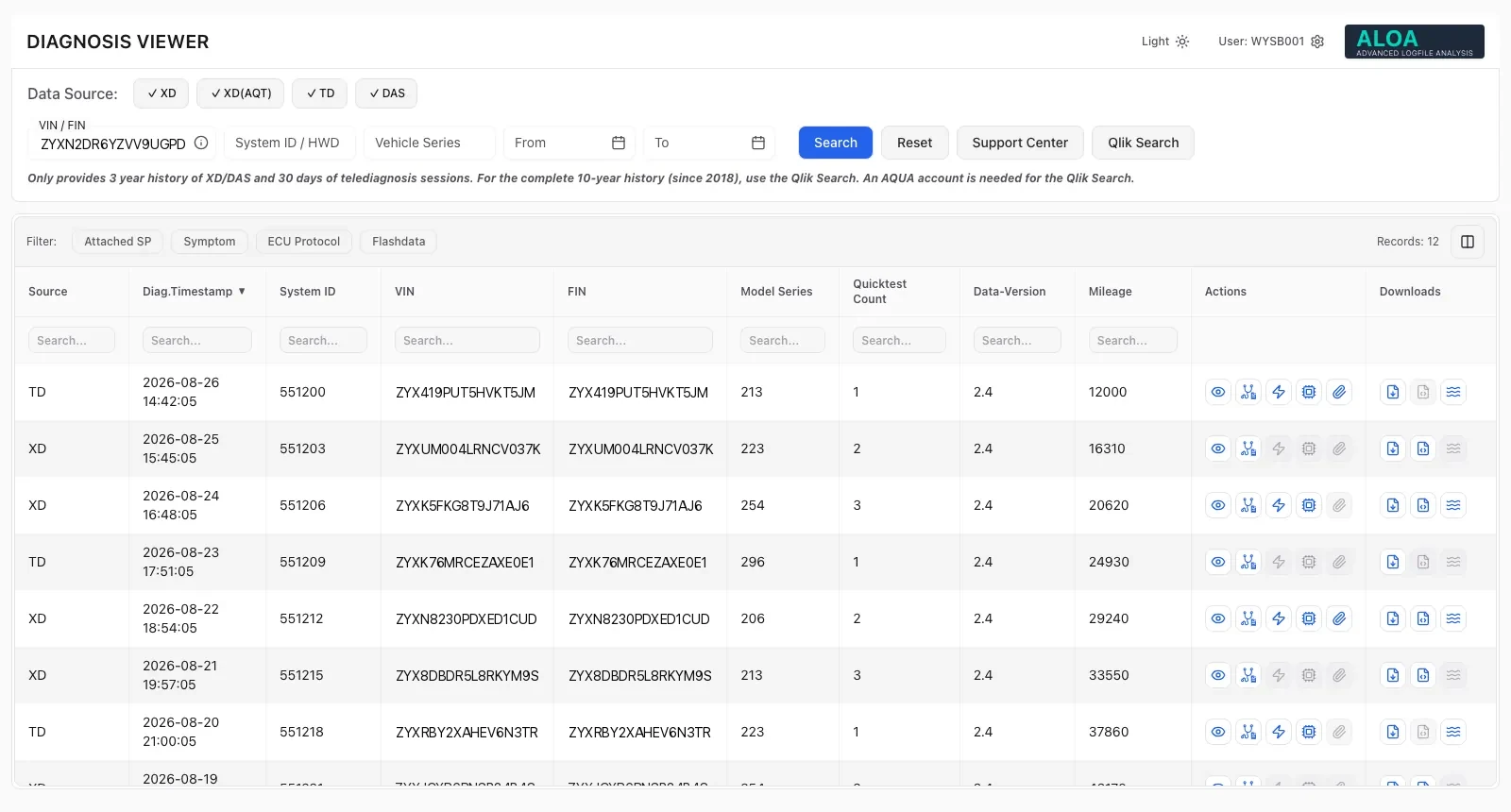
Records from all four sources are indexed together. Engineers search by vehicle, system or hardware identifier and open the session in one viewer, and the client's SSO and country permissions decide what each engineer can see.
The system in three steps.
Diagnosis records held in raw form, each in its own format.
Indexed behind the client’s SSO and country permissions.
Find a session by VIN, system or hardware ID and open it.
Inside the workflow.
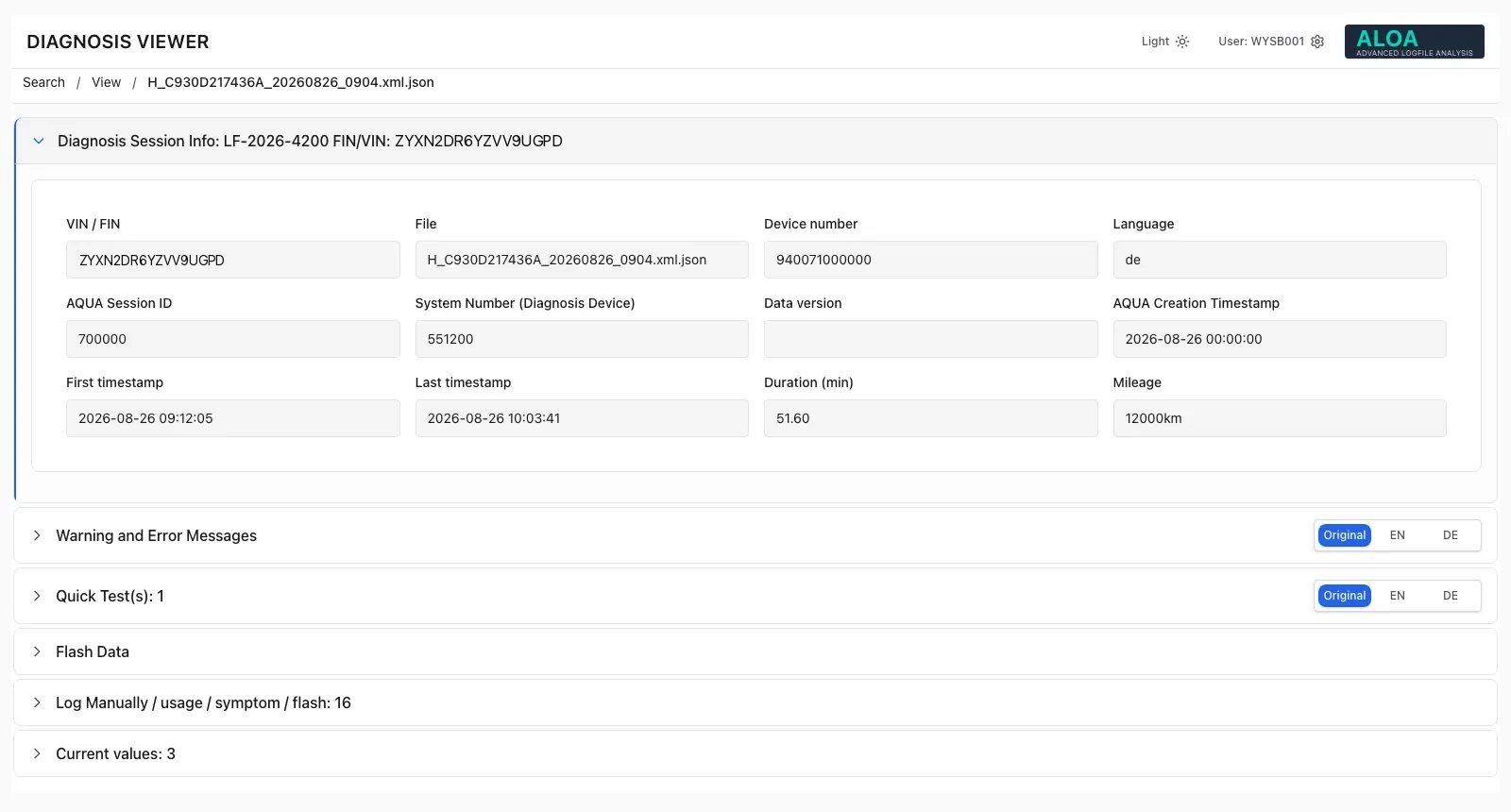
Inspect the diagnosis record
A session opens with its vehicle, file and timing details. Warnings, quick tests, flash data and logs expand from the same page.
What the platform does.
-
Fleet-wide search
Search by VIN, system or hardware ID across four source systems.
-
Session drill-down
Quick tests, ECU trees, fault codes, flash data and raw logs open in one viewer.
-
Serverless indexing
Indexing and search run serverless.
-
Access by country
Access follows the client’s own SSO and entitlement rules.
How it rolled out.
-
Indexing
Diagnosis records from the four source systems go into one search index.
-
Access
Search and session detail sit behind the client's SSO and entitlement rules.
-
API
Other internal systems read the same data through an API.
What changed.
The viewer indexes 115 million diagnosis sessions and 64 TB of raw data from four source systems. Screens shown here come from a demo environment with test data; figures are from the project collateral.
- diagnosis sessions indexed
- 115M
- raw diagnosis data
- 64TB
- source systems unified
- 4
Decisions behind the work.
One index over the four sources, rather than four separate search screens.
Access reuses the client's SSO and country permissions instead of a new user store.
An API makes the same data available to other internal teams.