

A shared record across the employee lifecycle.
Onboarding, attendance, leave, performance, separation and helpdesk on one employee record, in place of separate legacy systems.
Client: A global IT services corporation
The context.
A global IT services corporation ran onboarding, attendance, leave, performance and separation in separate applications. It needed one employee record, and integrations that could absorb growth and future group-company mergers.
One employee, several systems.
Each stage of the employee lifecycle lived in a different system. Approvals and reporting relied on manual effort, workforce figures were hard to see when they were needed, and nothing integrated cleanly with payroll, recruitment or project management.
- One system of record across the whole lifecycle
- Approval chains and helpdesk workflows matched to company policy
- Current workforce figures for leadership
- Two-way integration with payroll, recruitment and project tools
- Room to grow through group-company mergers
One record, many modules.
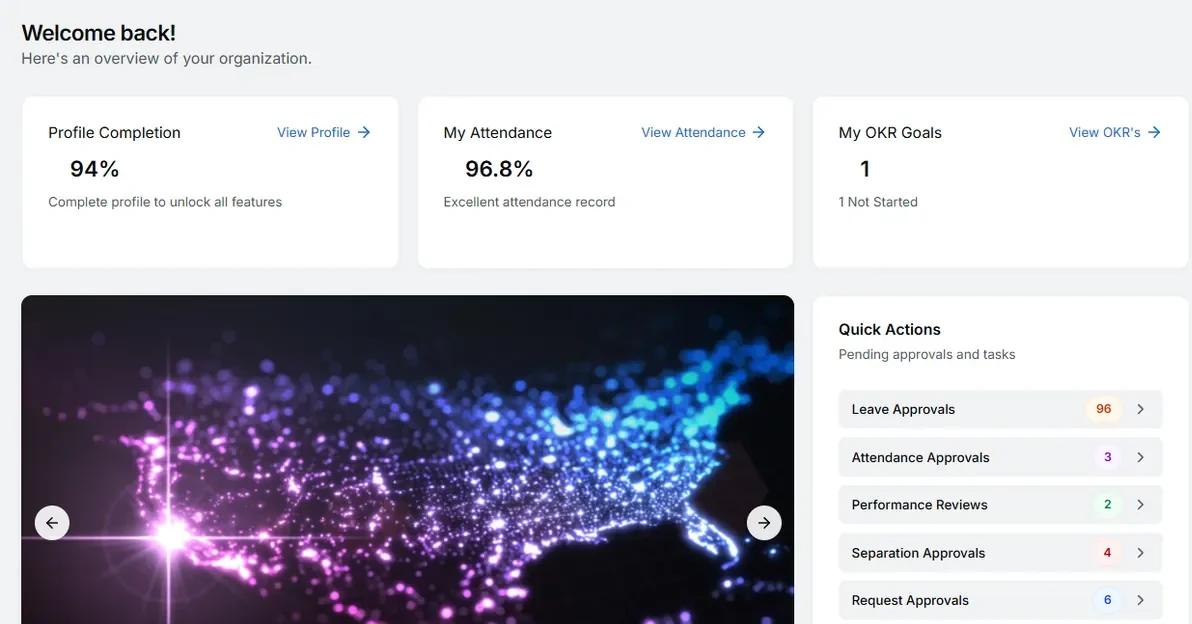
Each lifecycle module reads and writes the same employee record. Employees and HR staff work in role-based views of that record, and approvals, helpdesk tickets and reports draw on it directly instead of copying data between systems.
The system in three steps.
Identity, role and reporting line held once.
Onboarding, attendance, leave, performance and separation read the same record.
Payroll, recruitment and project systems stay separate and connect.
Inside the workflow.
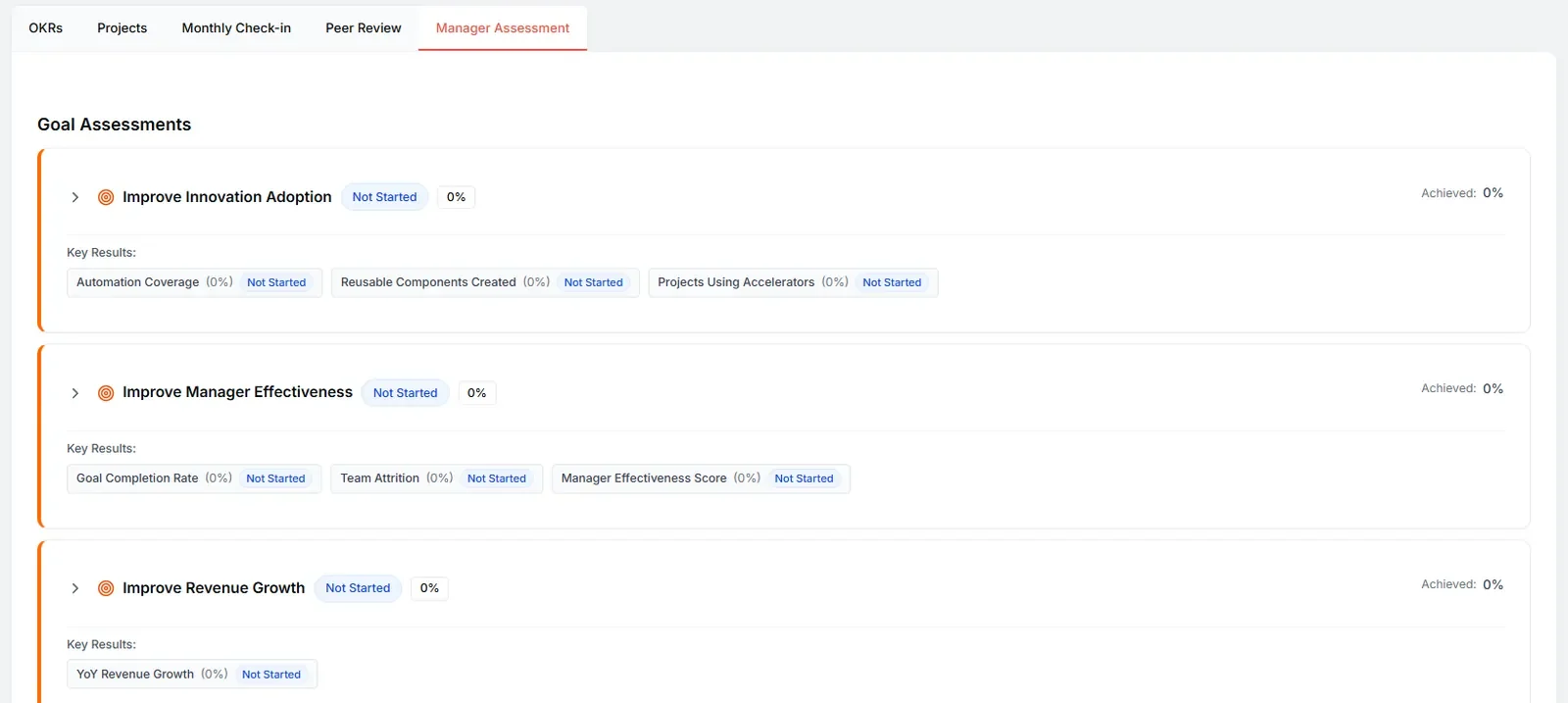
Goals and reviews in one workflow
Performance records bring goals, key results and the manager's assessment into the employee's own workflow.
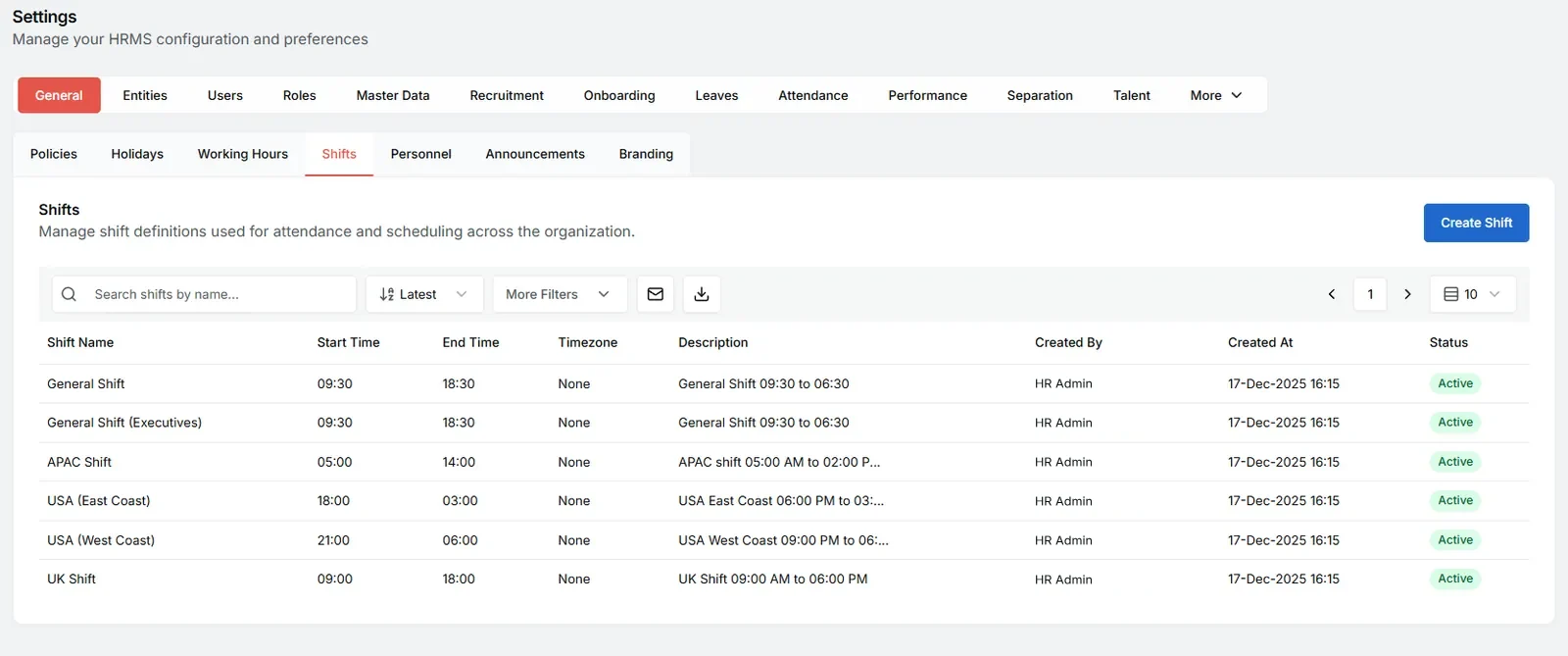
Configure working policies
HR staff configure holidays, working hours and shifts across time zones without a change request.
What the platform does.
-
Employee lifecycle
One record follows each employee from onboarding to separation.
-
Attendance and leave
Balances follow company policy, with shifts defined across time zones.
-
Performance
Goals, check-ins and review cycles sit on the employee record.
-
Helpdesk and approvals
Tickets are routed automatically and approval chains are configured by HR.
What changed.
The platform replaced the client's SAP SuccessFactors HR deployment, and its CRM module replaced the client's Salesforce use. It was delivered over a one-year roadmap. Scope is as reported by the project team.
Decisions behind the work.
Modules share one employee record instead of synchronising copies.
Approval chains are configuration, so policy changes do not need a release.
Payroll, recruitment and project systems connect through two-way APIs.